LONDON – Irish-born British TV and radio talk show legend TerryWogan is to host a special compilation episode of The Ed Sullivan Show, which launches on Turner Classic Movies in the U.K. on Nov. 10.
Wogan will host the special, providing running commentary and behind-the-scenes insight into the show's famous artists and its legendary presenter, Sullivan.
The landmark U.S. variety show, presented by New York entertainment columnist Sullivan, originally ran in the U.S. for more than two decades and is famous for propelling the careers of The Beatles, ElvisPresley, The Rolling Stones and The Supremes to new heights.
The Ed Sullivan Show featured more than 10,000 acts in its time on air between 1948 and 1971, a mix of rock n’ roll stars, opera singers, popular artists, songwriters, comedians, dancers, actors and circus acts.
The show is scheduled to make its U.K. premiere on TCM with Terry Wogan Presents the Very Best of the Ed Sullivan Show, a 90-minute compilation of some of the stand-out highlights from the show throughout its time span, including early appearances from The Beatles, The Jackson 5, Barbra Streisand, The Doors, BuddyHolly, StevieWonder and comedienne JoanRivers.
Wogan described Sullivan's show as "the pre-eminent variety show of its time, which hosted all of the greatest names in American show business."
He added: "The Beatles, The Supremes, The Doors, Elvis Presley, Liza Minnelli and Julie Andrews, to name but a few. This show introduced the very best musical, comedy and specialty acts of the day -- and when Ed Sullivan talked, America listened. Such legendary acts are timeless. I’m very much looking forward to seeing it all play out afresh on TCM for U.K. audiences."
TCM is a 24-hour cable and satellite film and general entertainment channel, which launched in the U.K. and across EMEA in 1999.
The Ed Sullivan Show launches on TCM U.K. on Nov. 10 at 7 p.m. GMT, with new episodes rolling out every Saturday and Sunday at that time.
UCLA to house worldwide database of brain images for chronic-pain conditions
Public release date: 16-Oct-2013 [
| E-mail
| Share
]
Contact: Rachel Champeau rchampeau@mednet.ucla.edu 310-794-2270 University of California - Los Angeles Health Sciences
NIH funding helps launch network designed to accelerate research, treatments
What do migraine, irritable bowel syndrome, fibromyalgia and rheumatoid arthritis have in common? All involve chronic pain.
A new database featuring hundreds of brain scans and other key clinical information will help researchers tease out similarities and differences between these and many other chronic-pain conditions, helping to accelerate research and treatment development.
The Gail and Gerald Oppenheimer Family Center for Neurobiology of Stress at UCLA will serves as the main hub for this new Pain and Interoception Imaging Network (PAIN), the first-ever standardized database for brain imaging associated with chronic pain. So far, 14 institutions in North America and Europe are participating.
Building upon their experiences creating a similar but smaller network to study pelvic pain, the UCLA team is now developing this larger chronic-pain network with the help of a $300,000 grant from the National Institutes of Health.
"We are now recognizing that chronic pain is a brain disease, and if we want to treat it more effectively, we need to better understand and treat the mechanisms in the brain that are driving it," said Dr. Emeran Mayer, a professor of medicine in the divisions of digestive diseases, physiology and psychiatry at the David Geffen School of Medicine at UCLA and executive director of the Gail and Gerald Oppenheimer Family Center for Neurobiology of Stress at UCLA.
According to Mayer, brain imaging is one of the most promising technologies for breakthrough findings in chronic pain. However, research is currently significantly limited, due to the fact that most institutions can only support small studies on their own and lack access to large samples of patients. In addition, there is no standardization of acquired data, making it difficult to combine brain scans from multiple investigators that are obtained using different scanners, techniques and sets of clinical data.
That will change with the new PAIN. The aim is for the network to include information from more than a thousand patients, including both adults and children.
In addition to brain scans, researchers will also have access to clinical and biological information on patients the so-called "metadata" including symptom measures; psychosocial factors; gene expression; immune system information; data on bacteria in the intestines, known as gut microbiota; and environmental data. Researchers can then develop large, overlapping data sets to pinpoint similarities and differences among chronic-pain conditions and correlate brain scans with clinical metadata.
"Like a fingerprint, researchers will be able to pick out distinct patterns from the scans of individuals with each pain condition and, combined with additional information provided by the network, assess how chronic pain manifests differently between men and women, across the life span, or between conditions," said Dr. Bruce Naliboff, a professor in the departments of medicine and psychiatry and biobehavioral sciences at the Geffen School of Medicine and co-director of the Gail and Gerald Oppenheimer Family Center for Neurobiology of Stress.
Dr. Kirsten Tillisch, a UCLA associate professor of digestive diseases who directs the neuroimaging core at the Oppenheimer Center, points out that in the future, PAIN will also include information about the tens of trillions of microbes that make up the bacteria living in the intestines. She notes that each patient's gut microbiota is unique, like a signature card.
"Researchers are now exploring the connection between the brain and gut, and the type of bacteria living in the intestine may also play a role in some forms of chronic visceral pain," said Tillisch.
The standardized brain scans will include structural data on grey and white matter and on intrinsic oscillations of the brain "resting state scans." Such scans are obtained when the brain is not engaged in a particular task.
Mayer adds that PAIN may also help researchers in the future identify and pinpoint appropriate treatments by targeting subsets of conditions.
"The more information we can gather about each individual chronic-pain condition, the better we'll be at predicting how subsets of patients will react to therapies," he said.
###
UCLA's Gail and Gerald Oppenheimer Family Center for Neurobiology of Stress, part of the UCLA Division of Digestive Diseases, is an NIH-funded multidisciplinary, translational research program partially supported by philanthropy. Its mission is to identify the role of the brain in health and medical disease. The Center is comprised of several research programs which focus on the interactions of the brain with the digestive, cardiovascular and urological systems, chronic pain and mind brain body interactions.
For more news, visit the UCLA Newsroom and follow us on Twitter.
[
| E-mail
| Share
]
AAAS and EurekAlert! are not responsible for the accuracy of news releases posted to EurekAlert! by contributing institutions or for the use of any information through the EurekAlert! system.
UCLA to house worldwide database of brain images for chronic-pain conditions
Public release date: 16-Oct-2013 [
| E-mail
| Share
]
Contact: Rachel Champeau rchampeau@mednet.ucla.edu 310-794-2270 University of California - Los Angeles Health Sciences
NIH funding helps launch network designed to accelerate research, treatments
What do migraine, irritable bowel syndrome, fibromyalgia and rheumatoid arthritis have in common? All involve chronic pain.
A new database featuring hundreds of brain scans and other key clinical information will help researchers tease out similarities and differences between these and many other chronic-pain conditions, helping to accelerate research and treatment development.
The Gail and Gerald Oppenheimer Family Center for Neurobiology of Stress at UCLA will serves as the main hub for this new Pain and Interoception Imaging Network (PAIN), the first-ever standardized database for brain imaging associated with chronic pain. So far, 14 institutions in North America and Europe are participating.
Building upon their experiences creating a similar but smaller network to study pelvic pain, the UCLA team is now developing this larger chronic-pain network with the help of a $300,000 grant from the National Institutes of Health.
"We are now recognizing that chronic pain is a brain disease, and if we want to treat it more effectively, we need to better understand and treat the mechanisms in the brain that are driving it," said Dr. Emeran Mayer, a professor of medicine in the divisions of digestive diseases, physiology and psychiatry at the David Geffen School of Medicine at UCLA and executive director of the Gail and Gerald Oppenheimer Family Center for Neurobiology of Stress at UCLA.
According to Mayer, brain imaging is one of the most promising technologies for breakthrough findings in chronic pain. However, research is currently significantly limited, due to the fact that most institutions can only support small studies on their own and lack access to large samples of patients. In addition, there is no standardization of acquired data, making it difficult to combine brain scans from multiple investigators that are obtained using different scanners, techniques and sets of clinical data.
That will change with the new PAIN. The aim is for the network to include information from more than a thousand patients, including both adults and children.
In addition to brain scans, researchers will also have access to clinical and biological information on patients the so-called "metadata" including symptom measures; psychosocial factors; gene expression; immune system information; data on bacteria in the intestines, known as gut microbiota; and environmental data. Researchers can then develop large, overlapping data sets to pinpoint similarities and differences among chronic-pain conditions and correlate brain scans with clinical metadata.
"Like a fingerprint, researchers will be able to pick out distinct patterns from the scans of individuals with each pain condition and, combined with additional information provided by the network, assess how chronic pain manifests differently between men and women, across the life span, or between conditions," said Dr. Bruce Naliboff, a professor in the departments of medicine and psychiatry and biobehavioral sciences at the Geffen School of Medicine and co-director of the Gail and Gerald Oppenheimer Family Center for Neurobiology of Stress.
Dr. Kirsten Tillisch, a UCLA associate professor of digestive diseases who directs the neuroimaging core at the Oppenheimer Center, points out that in the future, PAIN will also include information about the tens of trillions of microbes that make up the bacteria living in the intestines. She notes that each patient's gut microbiota is unique, like a signature card.
"Researchers are now exploring the connection between the brain and gut, and the type of bacteria living in the intestine may also play a role in some forms of chronic visceral pain," said Tillisch.
The standardized brain scans will include structural data on grey and white matter and on intrinsic oscillations of the brain "resting state scans." Such scans are obtained when the brain is not engaged in a particular task.
Mayer adds that PAIN may also help researchers in the future identify and pinpoint appropriate treatments by targeting subsets of conditions.
"The more information we can gather about each individual chronic-pain condition, the better we'll be at predicting how subsets of patients will react to therapies," he said.
###
UCLA's Gail and Gerald Oppenheimer Family Center for Neurobiology of Stress, part of the UCLA Division of Digestive Diseases, is an NIH-funded multidisciplinary, translational research program partially supported by philanthropy. Its mission is to identify the role of the brain in health and medical disease. The Center is comprised of several research programs which focus on the interactions of the brain with the digestive, cardiovascular and urological systems, chronic pain and mind brain body interactions.
For more news, visit the UCLA Newsroom and follow us on Twitter.
[
| E-mail
| Share
]
AAAS and EurekAlert! are not responsible for the accuracy of news releases posted to EurekAlert! by contributing institutions or for the use of any information through the EurekAlert! system.
Modest increases in marketing and outreach to local communities can increase the amount of physical activity that occurs in parks, providing a cost-effective way to potentially improve a community's health, according to a new RAND Corporation study.
The project, which examined 50 parks across Los Angeles, found that simple interventions such as increased signage boosted physical activity by 7 to 12 percent over the study period in relation to parks that did not make changes. The findings are published online by the American Journal of Preventive Medicine.
"The study shows that environmental cues influence and change individual behavior, including physical behavior," said Dr. Deborah A. Cohen, the study's lead author and a senior natural scientist at RAND, a nonprofit research organization. "When physical activity opportunities and reminders become more obvious, whether they are overt signs or notices for classes or new walking paths, they may lead people to becoming more active, especially if they are already in a park."
Although most Americans live in a community with a network of parks and recreation facilities suited to exercise, most do not meet the national guidelines for physical activity. Those recommendations suggest adults engage in physical activity for 150 minutes per week, while children should do so for 60 minutes per day.
An increase in physical activity among people in Finland over the past few decades has been attributed, in part, to an increased focus on local parks and sports facilities. In contrast, many U.S. municipalities -- including Los Angeles -- have trimmed support for public physical activity programs and parks.
RAND researchers wanted to examine whether, given limited resources, parks could adjust their programming and outreach efforts to increase activity if they had better information about local use and activity preferences. The second question was whether the involvement of park advisory boards composed of community members would help improve the decisions made by park directors.
To conduct the project, 50 parks in the City of Los Angeles that included a recreation center and full-time staff were randomized into three groups. In the first group, the park director worked with the research team to determine how to attract more park users and increase physical activity. The research project made $4,000 available to each park for marketing, outreach and programming activities.
In the second group, the research team worked with the park director and an existing local park advisory board to collect and analyze information about park usage and decide how to spend the marketing funds. The third group of parks did not receive any additional help.
In both groups, most of the money was spent on improving signage that encouraged people to participate in park-sponsored activities. Each park was monitored to assess the characteristics of the park and its users, including physical activity levels. The study period ran from 2007 to 2012.
Among the parks that received project funding, there was no substantial difference in the amount of additional physical activity observed between those that involved park advisory boards and those that didn't.
Researchers say most of the increase in activity appeared to be concentrated among existing park users, suggesting that putting reminders and signs in areas outside the park may be necessary to recruit new users to the park.
###
Support for the study was provided by the National Heart, Lung and Blood Institute. Other authors of the study are Bing Han, Kathryn Pitkin Derose, Stephanie Williamson and Terry Marsh, all of RAND, and Thomas. L. McKenzie of San Diego State University.
RAND Health is the nation's largest independent health policy research program, with a broad research portfolio that focuses on health care costs, quality and public health preparedness, among other topics.
[
| E-mail
| Share
]
AAAS and EurekAlert! are not responsible for the accuracy of news releases posted to EurekAlert! by contributing institutions or for the use of any information through the EurekAlert! system.
Physical activity in parks can been boosted by modest marketing
Modest increases in marketing and outreach to local communities can increase the amount of physical activity that occurs in parks, providing a cost-effective way to potentially improve a community's health, according to a new RAND Corporation study.
The project, which examined 50 parks across Los Angeles, found that simple interventions such as increased signage boosted physical activity by 7 to 12 percent over the study period in relation to parks that did not make changes. The findings are published online by the American Journal of Preventive Medicine.
"The study shows that environmental cues influence and change individual behavior, including physical behavior," said Dr. Deborah A. Cohen, the study's lead author and a senior natural scientist at RAND, a nonprofit research organization. "When physical activity opportunities and reminders become more obvious, whether they are overt signs or notices for classes or new walking paths, they may lead people to becoming more active, especially if they are already in a park."
Although most Americans live in a community with a network of parks and recreation facilities suited to exercise, most do not meet the national guidelines for physical activity. Those recommendations suggest adults engage in physical activity for 150 minutes per week, while children should do so for 60 minutes per day.
An increase in physical activity among people in Finland over the past few decades has been attributed, in part, to an increased focus on local parks and sports facilities. In contrast, many U.S. municipalities -- including Los Angeles -- have trimmed support for public physical activity programs and parks.
RAND researchers wanted to examine whether, given limited resources, parks could adjust their programming and outreach efforts to increase activity if they had better information about local use and activity preferences. The second question was whether the involvement of park advisory boards composed of community members would help improve the decisions made by park directors.
To conduct the project, 50 parks in the City of Los Angeles that included a recreation center and full-time staff were randomized into three groups. In the first group, the park director worked with the research team to determine how to attract more park users and increase physical activity. The research project made $4,000 available to each park for marketing, outreach and programming activities.
In the second group, the research team worked with the park director and an existing local park advisory board to collect and analyze information about park usage and decide how to spend the marketing funds. The third group of parks did not receive any additional help.
In both groups, most of the money was spent on improving signage that encouraged people to participate in park-sponsored activities. Each park was monitored to assess the characteristics of the park and its users, including physical activity levels. The study period ran from 2007 to 2012.
Among the parks that received project funding, there was no substantial difference in the amount of additional physical activity observed between those that involved park advisory boards and those that didn't.
Researchers say most of the increase in activity appeared to be concentrated among existing park users, suggesting that putting reminders and signs in areas outside the park may be necessary to recruit new users to the park.
###
Support for the study was provided by the National Heart, Lung and Blood Institute. Other authors of the study are Bing Han, Kathryn Pitkin Derose, Stephanie Williamson and Terry Marsh, all of RAND, and Thomas. L. McKenzie of San Diego State University.
RAND Health is the nation's largest independent health policy research program, with a broad research portfolio that focuses on health care costs, quality and public health preparedness, among other topics.
[
| E-mail
| Share
]
AAAS and EurekAlert! are not responsible for the accuracy of news releases posted to EurekAlert! by contributing institutions or for the use of any information through the EurekAlert! system.
NEW YORK (AP) — Intel said Tuesday that its third-quarter net income was unchanged, stymied by a continued slump in global PC demand.
The chipmaker earned $2.95 billion, or 58 cents per share, compared with $2.97 billion, or 58 cents per share, in the same quarter of 2012.
Revenue also was unchanged at about $13.5 billion.
The drop in PC-related sales came amid another decline in PC shipments. Intel supplies chips for about four out of every five PCs. The rest come from Advanced Micro Devices Inc., which reports financial results on Thursday.
IDC said last week that worldwide PC shipments fell nearly 8 percent during the third quarter, to 81.6 million, while fellow market research firm Gartner Inc. put the decline at almost 9 percent, to 80.3 million. The two firms define PCs slightly differently. The drop marked the sixth-straight quarter of decline for the industry, as computer makers, and the companies that supply them, try to reshape themselves amid the continued shift toward tablets and smartphones.
Intel CEO Brian Krzanich said on a conference call with investors that while consumer demand in emerging markets was sluggish during the recent quarter, the company started to see early signs of improvement in North America and western Europe. He attributed that to the company's growing product lineup.
Intel's results for the quarter, which ended Sept. 28, beat Wall Street predictions. Analysts polled by FactSet expected a profit of 53 cents per share on revenue of $13.4 billion.
Revenue at the company's personal-computer business fell 3.5 percent to $8.4 billion because of a drop in the number of chips sold, while data center revenue increased 12 percent to $2.9 billion, helped by both higher prices and higher volumes.
For the fourth-quarter, Intel projected revenue of $13.2 billion to $14.2 billion. Analysts were looking for $14.0 billion.
Shares of Santa Clara, Calif.-based Intel Corp. fell 59 cents, or 2.5 percent, to $22.80 in extended trading after the release of results.
Taking care of a family member can be a life-extending experience, a study finds.
iStockphoto.com
The stereotype of caring for a family member is that it's so stressful it harms the caregiver's health. But that's not necessarily so.
Studies are conflicted, finding that caregiving can harm or help the caregiver. Here's one on the plus side. A study finds that people who care for a family member live longer than similar people who aren't caregiving.
The scientists didn't ask the caregivers why they might be healthier and presumably happier than similar people who weren't caring for someone. But the 3,503 people who participated represented a broad swath of the American public, and may be a better representation of the caregiving experience overall.
Just 17 percent of the people surveyed said they had high levels of caregiving strain, and the majority put in less than 14 hours of care a week.
"The burden of caregiving certainly can be overwhelming and negative to health," says David Roth, director of the Center on Aging and Health at Johns Hopkins University and lead author of the study, which was published in the American Journal of Epidemiology. "But those are not necessarily the typical experience."
The study data was originally gathered for a big multiyear study on stroke risk, but the people being cared for in this study had broad range of health problems. The caregivers themselves were age 64 on average, more likely to be female and either white or African American.
Family caregivers were 18 percent less likely to die than non-caregivers over six years, the researchers found.
Something must have made life better for the caregivers. But what? To help find out, we called up Leah Eskinazi, director of operations for the Family Caregiver Alliance in San Francisco.
"There are people who find caregiving very rewarding," Eskinazi told Shots. "They feel really good that they can give back to Mom, for example, because Mom was really there for them when they were growing up. Maybe they weren't the best kid, but as they've aged they can have a more balanced healthier relationship and heal some of those wounds."
Context is everything, Eskinazi says. Caring for someone with dementia can be more stressful and depressing, because the person is facing a long inevitable decline. "You're caring for someone who can't voice their preferences," she says. "You're making decisions for another person and for yourself, and that can last for a long time. It's tough."
But only about 10 percent of family caregivers are tending someone with dementia, other studies have found.
Caring for someone after a stroke, by contrast, can be very positive. "There's a lot of energy going into helping that person recover," Eskinazi says.
And in many cases the person being cared for is in a position to be grateful. "To have someone stick by you, or a group of people stick by you, that's pretty cool," Eskinazi says. "It gives you an opportunity to say thank you."
Spouses typically expect to be taking care of their mate in old age, but adult children don't always prepare for that possibility — or try not to think about it.
People tend to avoid the Family Caregiver Alliance's booth at health fairs, Eskinazi admits. "People don't really want to think about it. It's time, it's emotion and it takes energy."
But this latest study points out that caregiving isn't all a big minus for the caregiver — something to prepare for, perhaps, but a normal, often rewarding part of life.
In the wake of Charlie Hunnam's abrupt departure from "Fifty Shades of Grey," the studio is left to scramble desperately for another actor to star opposite Dakota Johnson.
Universal Pictures and Focus Features haven't yet resorted to posting a woman-seeking-man personal ad on Craigslist. But in the wake of CharlieHunnam's abrupt departure from Fifty Shades of Grey -- after what sources say was increasing conflict with the high-profile film's creative team -- the studio is left to scramble desperately for another actor to star opposite Dakota Johnson in the role of billionaire S&M fan Christian Grey so the project can meet a looming Nov. 1 start date.
Universal chairman Donna Langley, producers Michael De Luca and Dana Brunetti, director Sam Taylor-Johnson and author EL James are said to have drafted a list of four men they want to read for the role. Although the list is being kept under NSA-level secrecy, THR.com revealed Oct. 13 that British TV stars Jamie Dornan, 31, and Christian Cooke, 26, are among the targets. Both actors came close to capturing the part the first time around but lost to Hunnam because the Sons of Anarchy star is a bigger name. (True Blood's Alexander Skarsgard also is being considered.)
Dornan could be emerging as a front-runner. Born in Northern Ireland, he's a former Calvin Klein model, dated Keira Knightley for two years and played Sheriff Graham on the first season of ABC's Once Upon a Time. According to a source, Dornan was contacted by Langley even before Hunnam officially dropped out Oct. 12. But a Dornan confidant says no overtures had been made at press time to the actor, who stars in British series The Fall, on which he plays a killer terrorizing Belfast. The fact that Dornan's wife, actress-singer Amelia Warner, is pregnant also could complicate matters.
The last thing Universal wants is another actor to emerge as its Fifty Shades protagonist only to waffle. The studio is reeling over Hunnam's exit less than three weeks before the start of production. Sources say his discomfort with the hoopla around the project had been mounting for at least four weeks before he bailed, which officially was blamed on his Sons schedule not allowing him time to prepare (the FX series wraps production Oct. 21). After signing Sept. 2, Hunnam faced a public frenzy on social media sites, where fans of the book congregated to fawn over and complain about his casting. Universal was forced to hire bodyguards for the actor at a recent Sons premiere, and two appearances to promote the show were canceled -- one at Goulet Motosports in Hawkesbury, Ontario, on Sept. 14, and one at Rocky's Harley-Davidson in London, Ontario, on Oct. 13.
In addition, Hunnam, who also is a writer (he penned the gothic horror screenplay Vlad for Brad Pitt's Plan B and Summit Entertainment), is said to have submitted his own very detailed script notes on Kelly Marcel's adaptation of the runaway best-seller. The notes were well received, according to sources, but that only led to Hunnam seeking further script approval, which was denied. "That's Charlie, that's who he is. He's particular," says one source.
According to another source, Hunnam, who was to be paid about $125,000 for the film, began butting heads with the creative team, including Taylor-Johnson. The conflict reached a fever pitch in early October, though everyone involved thought the issues had been resolved. But the discord spiked again Oct. 11. Hunnam's team at CAA and Brillstein Entertainment Partners strongly advised him to stay on the project for fear that his exit would embarrass Langley -- new to the chairman job -- and burn a bridge with one of the major studios. That same day, Universal hired writer Patrick Marber -- no stranger to taboo sex themes with his Oscar-nominated screenplay Notes on a Scandal -- to do a polish and bolster the characters. But by then, Hunnam, whose heart it seems never was in the project, had decided to decamp. The next morning, the studio announced his departure, and James tweeted, "I wish Charlie all the best." Universal and CAA declined comment.
Hunnam isn't the first actor to have doubts about playing the dungeon-loving Christian Grey. James' first choice, Robert Pattinson, never engaged with producers. Garrett Hedlund was heavily courted this summer and even received an informal offer, but the Tron: Legacy star passed in July because he couldn't connect with the character. Now he is in Australia to shoot the Angelina Jolie-directed Unbroken.
Fortunately for Universal, its leading lady, Johnson, 24, remains firmly in place, ready to take on the virgin-turned-sexpert Anastasia Steele, a role that has greater dimension than the Grey character. But with the clock ticking, the start of production likely will need to be pushed back at least a week. Still, the studio says it remains committed to making its Aug. 1, 2014, release date.
For her part, the ever-involved James (she has approval rights on cast) is in Los Angeles the week of Oct. 14 as the hunt for a new Christian Grey continues. As the author writes no fewer than 44 times in Fifty Shades: "Oh my."
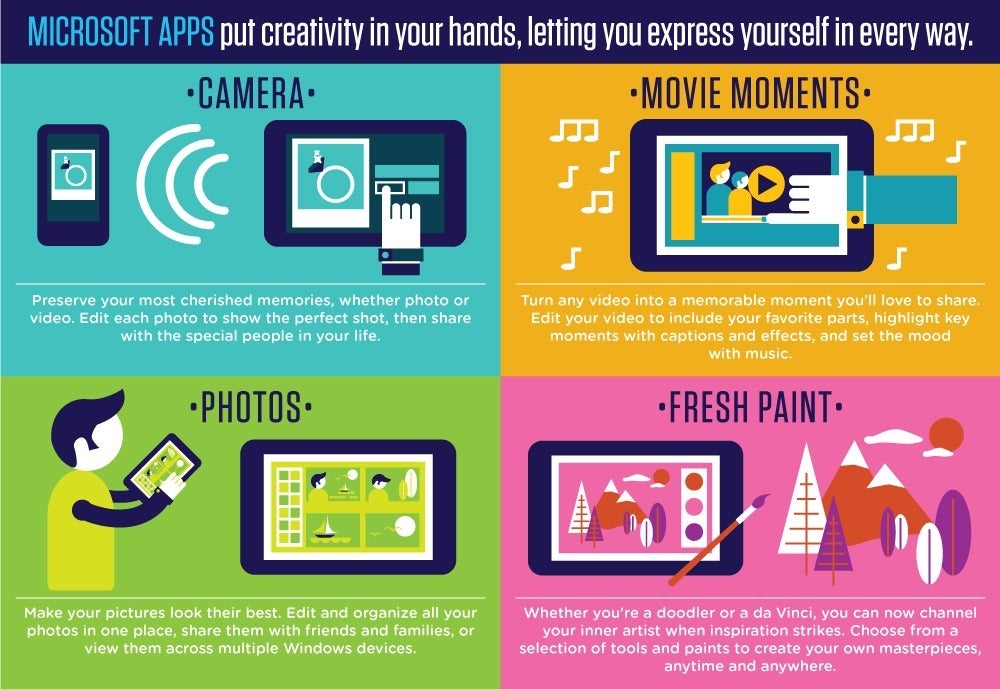
Movie Moments, the proverbial white whale of Windows 8 apps, has finally been hauled into the light on the eve of Windows 8.1's release, courtesy of a Microsoft blog post that introduces the new app and expounds on the changes coming to some familiar faces.
Movie Moments unveiled
A barebones placeholder of Movie Moments appeared in the original Windows 8.1 leak in March—all the way when the update was still going by its "Windows Blue" codename—but it disappeared in subsequent releases, including the final RTM release of the operating system, with nary a peek of it mentioned since. It turns out there's a good reason for that: Movie Moments will be available via the Windows Store, rather than baked into Windows 8.1 itself.
The Movie Moments interface. (Click to enlarge.)
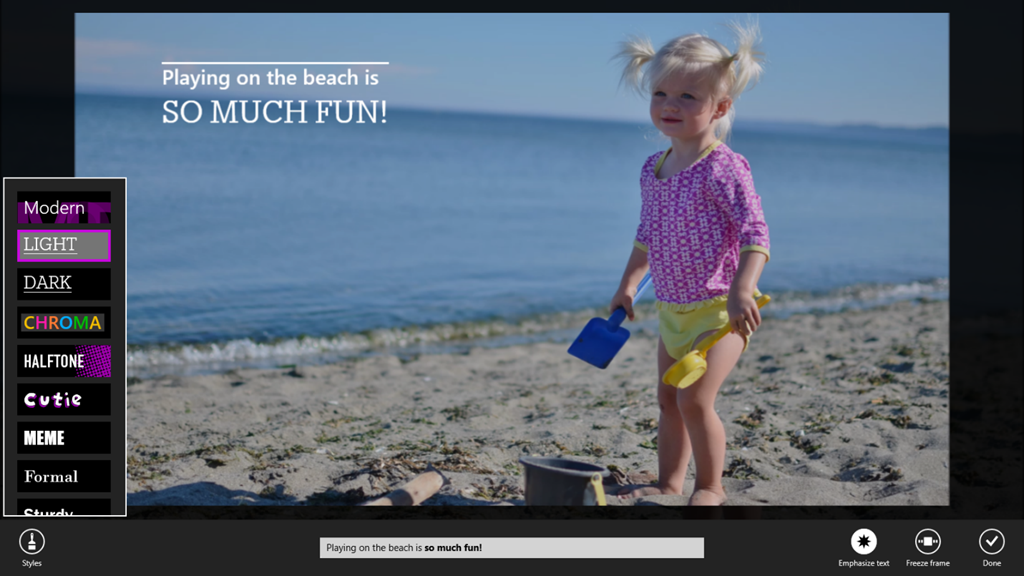
Microsoft didn't show much of the Movie Moments interface in its blog post, but it doesn't seem to be made for heavy-duty editing. The "simple app"—as Microsoft calls it—will be able to trim videos, add music, and slap captions on your videos, as shown in the example below.
In short, the app seems like an even more "streamlined" (perhaps too much so?) version of the Windows Movie Maker software that first appeared in Windows XP.
Fresh Paint, Photos, and Camera
Three other cornerstones of Microsoft's creative endeavors are also receiving slight makeovers.
Like Movie Maker, Microsoft's utterly superb Fresh Paint app will be available in the Windows Store, rather than being baked in to the operating system itself. The Windows 8.1 version adds new brushes, watercolors, a graphite pencil set, "Inspire Me" suggestions, and more. The app also blurs the line between the real and digital worlds, thanks to a partnership with CanvasPop that allows you to easily turn your Fresh Paintjobs into physical prints.
Photos and Camera both ship with Windows 8.1, and each has handy new features.
(Click to enlarge.)
The Camera app packs a fun new panorama mode based on Microsoft's killer Photosynth app, along with the newfound ability to capture individual photos while shooting videos. Meanwhile a "Photo Loop" mode has Camera capture a rapid succession of pictures from the second before you press the shutter button (spooky!) to one second after you press it again to end the shot, which allows you to choose the best photo of the bunch. You'll also be able to open Camera and take a quick pic straight from Windows 8.1's lock screen.
Sadly, the Windows 8.1 Photos app has dumped the Facebook and Flickr integration found in the Windows 8 version, but it also packs a bevy of new editing tools, such as manual cropping, red-eye removal, color enhancement, and more.
Tip of the iceberg
The tweaks in Windows 8.1's creative apps are only the beginning. Virtually every app has been overhauled in the update, and several new apps have been baked into the operating system re-do. Check out PCWorld's definitive review of Windows 8.1, then tune in tomorrow for even more coverage once Windows 8.1 hits the Windows Store at 7 A.M. Eastern/4 A.M. Pacific.

![[ Back to EurekAlert! ]](https://lh3.googleusercontent.com/blogger_img_proxy/AEn0k_vQgXQhn2IlP6Q2Gc1SgXGBFyLBqYR1wD35C0SLbPY0OhiS15wvl0g0fM0sYkJcilT0bDX0mbXLb3khJSpaD0u0jrOY6iIYfaWY3f6A_5o=s0-d)
 Share
Share